
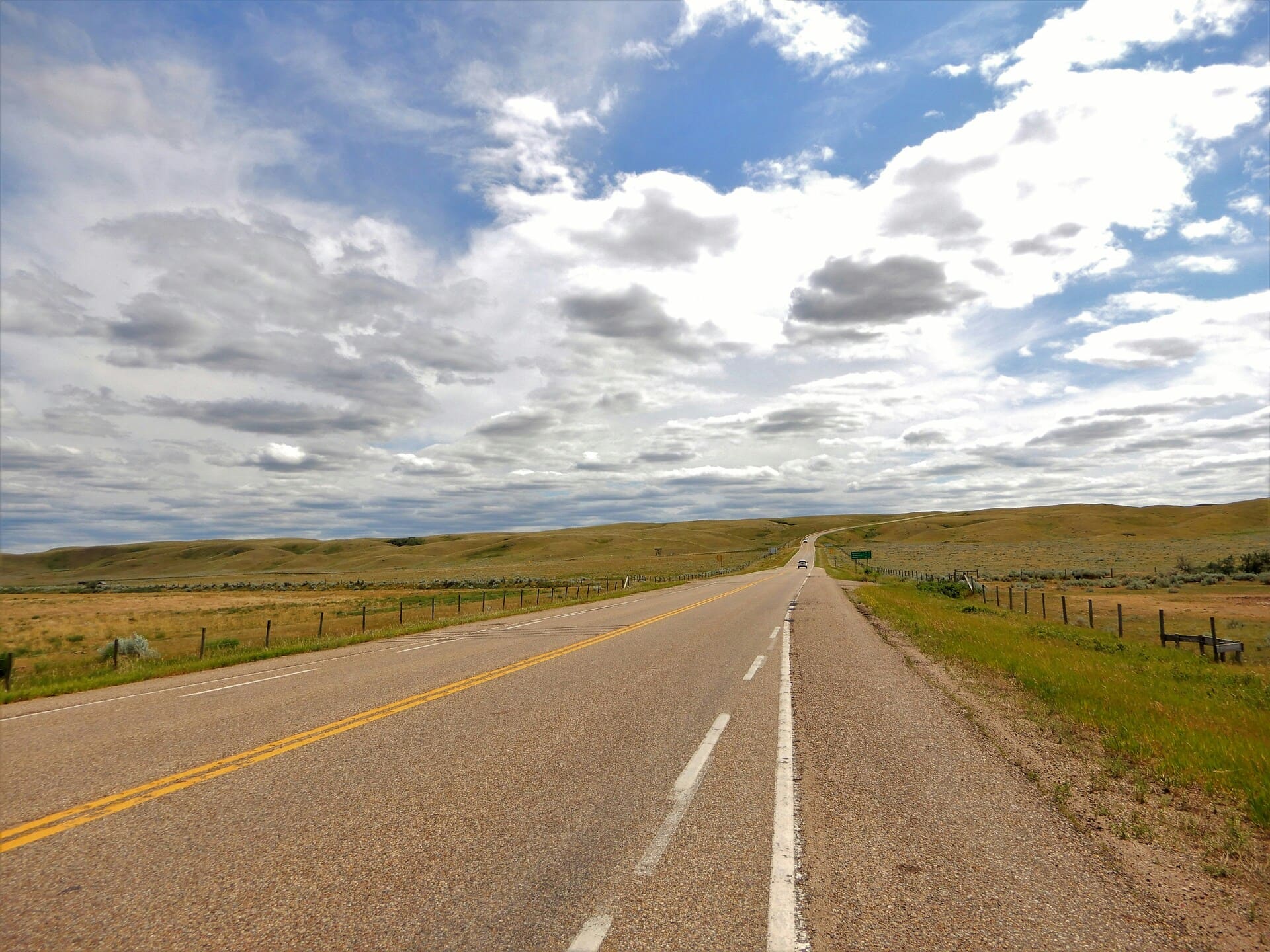
Bare land near Calgary ranges from roughly $350,000 for small parcels in Mountain View County to well over $1 million for view lots in Rocky View and Foothills County. The three counties differ sharply in pricing, parcel sizes, approval processes, and servicing costs, and those differences matter more on raw land than on an existing acreage. Before buying, confirm road access, the land use designation, water availability, septic suitability, and the distance to power. Servicing a raw parcel commonly adds $50,000 to $150,000 before construction starts. This guide compares the three counties so you can buy land that will actually support the build you have in mind.
Buying raw land close to Calgary is a different project from buying an acreage with a house already on it. With bare land, the price on the listing is the starting point. Everything that makes the land livable, from the well to the power line to the driveway, still has to happen, and the cost and difficulty of that work vary enormously from one parcel to the next.
The three counties closest to Calgary along the main corridors each handle land differently. Rocky View wraps around the city with premium pricing and detailed planning rules. Foothills to the south offers rolling country and mountain views at similar prices. Mountain View to the north along Highway 2 offers the most land for the money at the cost of a longer drive.
This guide compares bare land in Rocky View County, Foothills County, and Mountain View County, covering pricing, servicing, approvals, and the checks that protect you before closing. For the full step-by-step process of buying raw land and building anywhere in Alberta, our complete guide to buying bare land in Alberta covers construction costs and timelines in more depth.
Why Bare Land Near Calgary Is Its Own Market
Several things set raw land close to the city apart from rural land farther out.
Scarcity drives price. Land within commuting distance of Calgary is finite, and demand from buyers wanting to build is steady. Parcels near the city sell at prices that would buy considerably larger holdings an hour farther out.
Smaller parcels near the city. Close to Calgary, bare land commonly comes in 2 to 10 acre lots, often within planned country residential subdivisions. Larger parcels exist but command significant premiums.
More rules. Counties bordering a major city tend to have more detailed land use planning, with more designations, setback requirements, and architectural considerations in some subdivisions. Rocky View in particular has a layered planning framework.
Better servicing, sometimes. Parcels in established subdivisions often have power and gas at the lot line and roads already built, which sharply reduces servicing costs. Unsubdivided land farther from town may have none of that.
Development around you. Land near Calgary sits in the path of growth. What surrounds a parcel today may change, which can raise value but can also change the setting you were buying for.
Rocky View County: Proximity at a Premium
Rocky View offers the closest bare land to Calgary, with some parcels 15 to 30 minutes from city limits. That proximity sets the price.
Land pricing typically runs $400,000 to $800,000 for 2 to 5 acre parcels, and $700,000 to well over $1.2 million for larger parcels or those with mountain views west of the city. Parcels east toward Chestermere tend toward the lower end, while the country around Springbank, Bearspaw, and Bragg Creek sits at the top.
The planning framework is detailed. Rocky View has multiple residential and agricultural designations, area structure plans that govern specific regions, and in some subdivisions architectural guidelines covering home size and style. Confirming exactly what a parcel permits, and whether your planned home and shop fit within it, is essential before an offer.
Servicing varies widely. Lots in established subdivisions often have power, gas, and sometimes communal water already available. Unsubdivided parcels may need everything brought in. Some areas near the city face water licensing constraints, which makes confirming water availability especially important.
Rocky View suits buyers who commute into Calgary regularly and want to build close to the city, and who have the budget to absorb premium land costs on top of construction.
Foothills County: Views and Rolling Country
Foothills County offers bare land south and southwest of Calgary, from the Okotoks and De Winton area out to the foothills west of Diamond Valley.
Land pricing typically runs $350,000 to $750,000 for smaller parcels and climbs past $1 million for view lots and larger holdings in the western foothills. Parcels near High River and the eastern part of the county tend to offer better value, while mountain-view land around Priddis, Millarville, and Diamond Valley sits at the top.
The terrain creates its own considerations. Rolling and sloped parcels can offer spectacular building sites but raise questions about drainage, foundation design, driveway grades, and winter access that flat prairie land does not. Groundwater is also less predictable in the foothills, with well depth and flow varying considerably between neighbouring parcels.
Foothills County has its own land use rules covering building size, accessory structures, and livestock. Equestrian buyers find this county particularly appealing, though confirming livestock permissions on a specific designation is still essential.
Foothills suits buyers who want views and foothills terrain, plan to keep horses, or want to build south of Calgary with Okotoks or High River as their service town.
Mountain View County: The Most Land for the Money
Mountain View County offers bare land along the Highway 2 corridor around Carstairs, Didsbury, and Olds, and in the foothills country west toward Sundre and Water Valley.
Land pricing is considerably lower than the two counties bordering Calgary. Parcels of 5 to 20 acres typically run $150,000 to $400,000, and larger holdings of 40 acres or more often sit between $250,000 and $600,000. Parcels near Carstairs, closest to Calgary, carry the highest prices in the county.
The trade-off is distance. Carstairs sits roughly 45 to 55 minutes from Calgary, Olds 60 to 75, and the western foothills country farther still. Buyers who work remotely or commute into the city a couple of days a week find the savings on land can fund a much better build.
Mountain View tends to be reasonable on accessory buildings and shop sizes, which matters to buyers planning large workshops. Groundwater along the Highway 2 corridor is generally good, though the western foothills parcels need the same careful water verification as Foothills County.
This is home for us, and we know the land in this county better than anywhere. Mountain View suits buyers who want more acreage, a larger shop, or more budget left over for the home itself, and who can accept a longer drive into Calgary.
Comparing the Three Counties
For proximity, Rocky View leads with parcels 15 to 30 minutes from city limits, followed by northern Foothills County near Okotoks and De Winton, then Mountain View at 45 minutes and beyond.
For land value, Mountain View delivers the most acreage per dollar by a wide margin. Foothills and Rocky View price similarly, with Rocky View generally highest near the city.
For views and terrain, western Foothills County and the Rocky View country west of Calgary offer mountain views and rolling land. Mountain View offers open farmland along Highway 2 and foothills timber to the west.
For planning complexity, Rocky View carries the most detailed framework. Foothills and Mountain View are generally more straightforward, though every county requires development and building permits.
For water predictability, the Highway 2 corridor in Mountain View tends to be the most reliable. Foothills terrain is the least predictable. Rocky View varies by area, with licensing constraints in some locations near the city.
What Servicing a Parcel Actually Costs
Servicing is where bare land budgets most often go wrong. Typical ranges near Calgary:
Well drilling: $15,000 to $35,000 installed for most parcels, rising past $40,000 where deeper drilling is needed, which is more common in the foothills.
Septic system: $20,000 to $30,000 for a conventional field, and $35,000 to $60,000 for mound or treatment systems on clay soils, high water tables, or sloped sites.
Power: $3,000 to $8,000 where service sits near the building site, rising to $20,000 to $80,000 or more where line extension is needed across the property.
Natural gas: $1,500 to $5,000 where available at the lot line. Where it is not, propane is the alternative, with higher ongoing heating costs.
Driveway and approach: $5,000 to $25,000 depending on length, grade, and culvert requirements, more on sloped foothills sites.
Total servicing commonly runs $50,000 to $150,000. A parcel in a serviced subdivision may cost more to buy but less to develop, so compare total cost to build-ready rather than sticker price alone.
When to Buy Land
Season matters more for raw land than for an acreage with a house on it. In winter, snow hides drainage paths, low ground, and soil conditions, and frozen ground makes percolation testing difficult or impossible. Buying land in winter usually means writing longer conditions so testing can happen after the thaw.
Late spring is the most revealing time to walk a parcel. Runoff shows exactly where water moves and pools, which tells you where a house, shop, and septic field can and cannot go. Summer and early fall are best for soil testing and well drilling, and they let you start servicing work before freeze-up. Buyers who close in late summer can often get a well drilled and power ordered before winter, which keeps a build on schedule for the following spring.
Checks to Make Before You Buy
After 20+ years walking land with buyers, we have seen most of the ways a bare land purchase can go wrong. Nearly all of them are preventable with the right checks before closing.
Confirm the land use designation. Make sure the parcel permits a residence, the home size you want, any shop or barn you plan, and livestock if that is part of the plan. County planning staff will answer questions before you submit an offer.
Verify legal, year-round access. The parcel needs dedicated, maintained road access for a building permit. Easement-only or seasonal access can stall or block a build.
Check water before you commit. Pull well logs for the parcel and its neighbours. In the foothills, consider making the offer conditional on a test well.
Test the soil for septic. A percolation test tells you whether a conventional field will work or whether you face the cost of a mound or treatment system.
Review the title. Look for easements, caveats, utility right-of-ways, and surface rights agreements that limit where you can build.
Look at the surroundings. Check for planned developments, road projects, gravel operations, or intensive agricultural uses nearby that could affect the setting.
Teresa keeps buyers updated as these checks and conditions move along, which helps on land purchases where several conditions often run at once.
Frequently Asked Questions
How much does bare land cost near Calgary?
Bare land near Calgary typically runs $400,000 to $800,000 for small parcels in Rocky View County, $350,000 to $750,000 in Foothills County, and $150,000 to $400,000 for 5 to 20 acres in Mountain View County. View lots and larger parcels close to the city exceed $1 million. Proximity to Calgary is the biggest driver of price.
Which county near Calgary has the cheapest land?
Mountain View County, north along Highway 2 around Carstairs, Didsbury, and Olds, offers the most land for the money. Parcels of 5 to 20 acres commonly run $150,000 to $400,000. The trade-off is a commute of 45 to 75 minutes into Calgary depending on location.
How much does it cost to service a bare land parcel?
Servicing commonly runs $50,000 to $150,000 before construction, covering well drilling, septic installation, power connection, gas if available, and driveway construction. Parcels in serviced subdivisions cost less to develop, while unsubdivided land far from existing power lines can cost considerably more.
Is it harder to build in Rocky View County?
Rocky View has a more detailed planning framework than its neighbours, with multiple designations, area structure plans, and architectural guidelines in some subdivisions. That does not make building difficult, but it makes confirming what a parcel permits essential before buying. Some areas near the city also face water licensing constraints.
Is the water reliable on bare land near Calgary?
It depends on location. The Highway 2 corridor in Mountain View County is generally reliable. Foothills terrain is the least predictable, with well depth and flow varying between neighbouring parcels. Rocky View varies by area. Pull well logs for neighbouring properties and consider a test well condition in the foothills.
Can I build a large shop on bare land near Calgary?
Usually, but the allowed size depends on the land use designation and county. Mountain View County tends to be reasonable on accessory building sizes. Rocky View and Foothills have more varied rules depending on designation. Confirm the specific limits with the county before buying if a large shop is part of your plan.
Should I buy land in a subdivision or an unsubdivided parcel?
Subdivision lots usually cost more upfront but often come with power, gas, and roads already in place, which lowers servicing costs and speeds up building. Unsubdivided parcels may be cheaper and larger but can need everything brought in. Compare total cost to build-ready rather than purchase price alone.
How long does it take to build on bare land near Calgary?
Most projects take 18 to 36 months from land purchase to move-in, covering closing, design and permits, servicing, and construction. Parcels needing subdivision, variances, or long power line extensions can take longer. Starting permit conversations with the county early shortens the timeline.
Can I keep horses on bare land near Calgary?
Often yes, particularly in Foothills and Mountain View County, but it depends on the land use designation and parcel size. Some Rocky View designations restrict livestock. Confirm the specific rules for a parcel before buying if horses are part of your plan.
What should I check before buying bare land?
Confirm the land use designation permits your plans, verify legal year-round road access, check water through neighbouring well logs or a test well, run a percolation test for septic, review the title for easements and surface rights, and look for planned developments or uses nearby. These checks prevent the most common and expensive bare land mistakes.
Disclaimer: Land pricing, servicing costs, and county planning details in this article reflect typical conditions in Rocky View, Foothills, and Mountain View County as of early 2026. Prices and costs vary significantly by parcel size, location, terrain, existing services, and current market conditions. Land use rules and approval processes change and differ between designations. Always consult county planning staff, surveyors, well and septic contractors, and other qualified professionals before buying land. This article is for educational purposes and should not be considered financial, legal, or professional advice.
Looking for Land Near Calgary?
Buying raw land well comes down to knowing what a parcel will cost to make livable and confirming it supports what you plan to build. We help buyers compare land across Rocky View County, Foothills County, and Mountain View County, along with Red Deer County to the north, and work through the access, water, septic, and designation checks before you commit. Reach out to start the conversation.
Posted by David Doyle onEnjoy this blog post? Click here to subscribe for updates
Leave A Comment